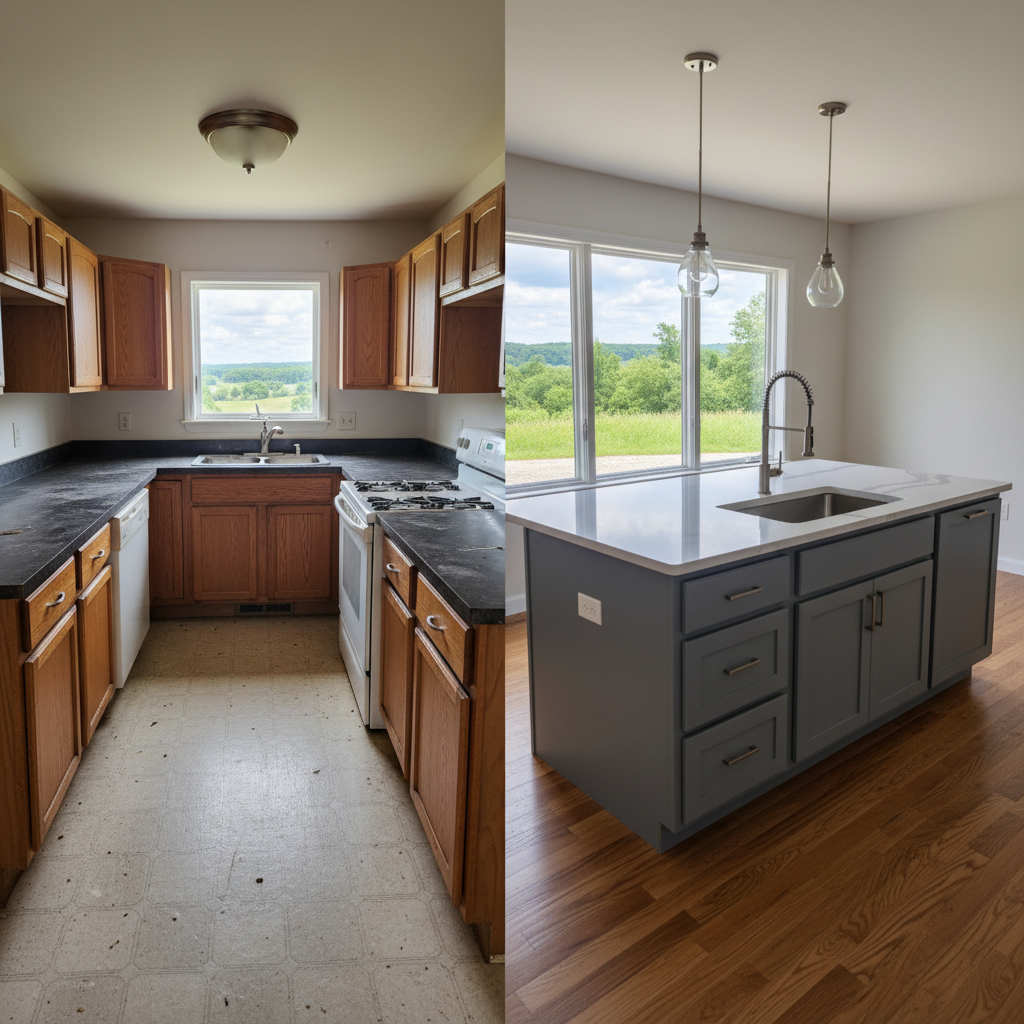
Alright, let's talk kitchen islands. You're probably picturing that perfect central spot for cooking, eating, or just gathering. But before you get too far, you need to decide: are you going built-in or freestanding? It's a bigger decision than some folks realize, and it impacts everything from your budget to how you actually use your kitchen day-to-day.
Built-In Islands: The Permanent Fixture
When I say 'built-in,' I mean an island that's permanently installed. It's anchored to the floor, often has plumbing and electrical running to it, and it's designed to match your existing cabinetry. Think of it as another section of your kitchen that just happens to be in the middle of the room.
- Cost: This is usually the more expensive route. You're paying for custom cabinetry, countertop fabrication, and professional installation. If you're adding plumbing for a sink or electrical for outlets and appliances, that's extra labor and materials. For a good quality built-in island, you're looking at several thousand dollars, easily.
- Durability: Top-notch. These are constructed like the rest of your cabinets, often with solid wood frames and durable finishes. Since they're fixed, they don't shift or wobble. They're built to last for decades.
- Maintenance: Pretty straightforward, just like your regular cabinets and countertops. Keep it clean, wipe up spills, and you're good. No special concerns here beyond what you'd do for any other kitchen surface.
- Appearance: Seamless and integrated. A built-in island looks like it was always meant to be there. It ties the whole kitchen together, offering a cohesive, high-end look. You can get exactly the storage, seating, and appliance integration you want.
Freestanding Islands: The Flexible Option
Now, a freestanding island is exactly what it sounds like: a piece of furniture. It might be a butcher block table, a repurposed dresser, or a purpose-built island on casters. It's not attached to the floor or walls, and usually doesn't have utilities running to it.
- Cost: Generally much lower. You can find some really nice freestanding islands for a few hundred to a couple of thousand dollars. No installation costs, no plumbing or electrical work unless you're getting super fancy with a portable induction cooktop or something.
- Durability: This varies wildly. A solid wood butcher block table will be incredibly durable. A cheaper particle board unit won't hold up as well. Since they can be moved, there's a slightly higher chance of nicks and dings if you're constantly repositioning it.
- Maintenance: Again, depends on the material. A stainless steel top is easy to clean. A natural wood top might need occasional oiling. Overall, it's usually simpler because there are fewer complex components like sinks or cooktops.
- Appearance: Can be charming and add character. A freestanding island often brings a different texture or style to the kitchen, acting as a focal point. It can feel less formal, more rustic, or even industrial depending on your choice. But it won't have that perfectly integrated, custom look of a built-in.
My Two Cents for Galena Homeowners
Here's the deal: for most folks around Galena, especially in those older homes with their unique layouts and sometimes uneven floors, a built-in island is usually the better long-term investment.
Why? First, stability. We get some serious ground movement here with our freeze-thaw cycles, and a solid, anchored island isn't going anywhere. A freestanding unit might feel a little less secure over time, especially if it's on casters and you're really leaning on it for prep work.
Second, resale value. A well-designed, built-in island adds significant value and appeal to a kitchen. It shows thoughtful planning and quality craftsmanship. When people are looking at homes, a custom island often makes a stronger impression than a piece of furniture.
Third, functionality. With a built-in, you can truly optimize your workflow. You can put a prep sink exactly where you need it, add outlets for small appliances, or even integrate a wine fridge. That level of customization is tough to beat with a freestanding unit.
Now, I'm not saying freestanding islands are bad. They're fantastic for smaller kitchens where flexibility is key, or if you're on a tighter budget and just need some extra counter space. If you're in a rental or just want something temporary, they're perfect. But if you're planning a full kitchen remodel and want something that will stand the test of time, look fantastic, and really work for your family, I always steer folks towards a built-in. Coastal Kitchen Remodeler specializes in making those built-in dreams a reality, designed specifically for how you live and cook.
Think about how you use your kitchen, what your budget looks like, and what kind of long-term vision you have for your home. That'll guide you to the right choice.