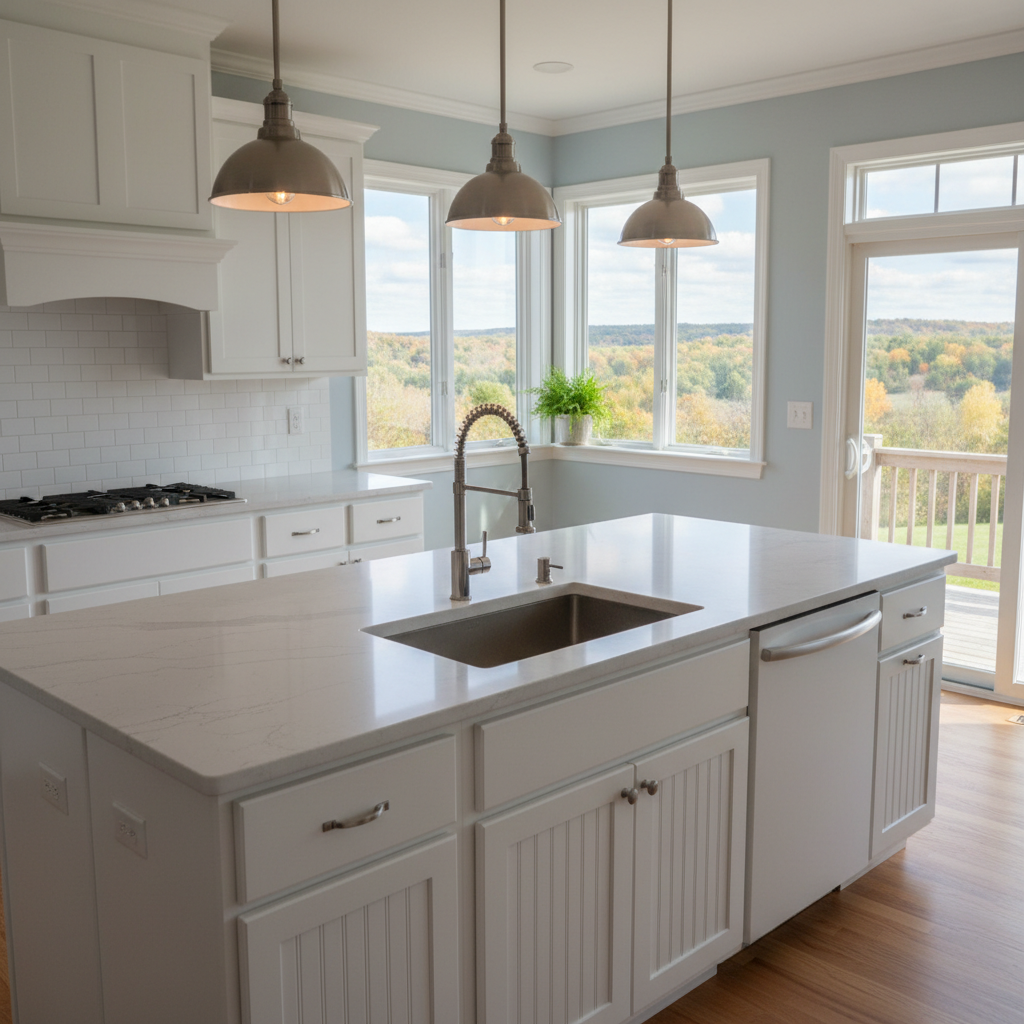
So, you want a kitchen island? Smart move. They're not just for looks; they bring a ton of function, storage, and often, a perfect spot for the family to hang out. But let's be honest, you're probably wondering what this whole thing is going to cost you. It's not a simple 'X dollars' answer, but I can certainly give you a good idea of what to expect right here in Galena.
What Makes Kitchen Island Installation Costs Go Up (or Down)?
A few big things really push the price tag around. Knowing these will help you make smarter choices, believe me.
- Size and Complexity: This one's pretty obvious. A small, straightforward island with just a flat top will be much cheaper than a huge, multi-level one that includes a built-in sink, dishwasher, and seating for five. More custom cuts, more materials, more labor – it all adds up.
- Materials: This is a huge factor. Laminate countertops, for instance, are a fraction of the cost of quartz or granite. The same goes for the cabinets. Are you leaning towards stock cabinets, semi-custom, or fully custom? Plywood boxes cost more than particleboard, but they'll pretty much last forever.
- Utilities: Here's where expenses can climb quickly. If you're dreaming of a sink in your island, that means running new plumbing lines for both water supply and drainage. An electrical outlet? That's new wiring. A gas cooktop? Now we're talking about running a gas line. Each of these additions means significant labor and material costs, especially if we have to cut into your existing flooring or walls to get those lines where they need to be. Older homes, particularly those in the historic district, often have tricky layouts that can make utility runs more complex and, well, more expensive.
- Appliances: Built-in microwaves, wine fridges, dishwashers – these all add to the appliance cost itself, plus the labor needed to properly install and connect them.
- Demolition & Prep: If you're ripping out an old island or part of a peninsula, there's a cost for that demolition and hauling away the debris. Sometimes, we even need to reinforce your floor joists if you're installing a really heavy island with a stone top, especially in older homes with those original 2x8 joists.
Typical Cost Ranges for a Kitchen Island in Galena
Okay, let's get down to brass tacks. These are ranges, remember, and your specific project could easily land on the lower or higher end depending on all those factors I just mentioned.
- Basic Island (No Utilities): For a simple, functional island with stock cabinets, a laminate or butcher block top, and no plumbing or electrical work, you're probably looking at $2,500 - $6,000. This is perfect for adding extra counter space and storage.
- Mid-Range Island (Some Utilities): This is where most folks find themselves. Picture semi-custom cabinets, a quartz or granite countertop, and maybe a single electrical outlet or a small prep sink. You're likely in the $6,000 - $12,000 range here.
- High-End/Custom Island (Full Utilities & Features): If you're after custom cabinetry, top-tier stone, a main sink, dishwasher, cooktop, and all the bells and whistles, get ready for $12,000 - $25,000+. These are the truly stunning islands you see gracing magazine pages.
These figures cover materials, labor for installation, and any necessary utility rough-ins. They generally don't include the cost of the actual appliances themselves, just the installation part.
What Should a Quote from Coastal Kitchen Remodeler Include?
When you get a quote from us, or honestly, any reputable contractor, it should be super detailed. You'll want to see:
- Line-item breakdown: This means cabinets (type, finish), countertops (material, edge profile), plumbing fixtures, electrical components, and so on.
- Labor costs: Clearly separated from the material costs.
- Permit fees: If they apply (and for islands with plumbing or electrical, they almost always do).
- Demolition and debris removal: If that's part of the job.
- Project timeline: An estimated start and completion date.
- Payment schedule: How and when payments are due.
Seriously, don't settle for some vague, one-line quote. You deserve to know exactly where your money is going.
How to Avoid Overpaying for Your Island
It's your hard-earned money, so you should be smart about it.
- Get Multiple Quotes: This is absolutely essential. Chat with 2-3 reputable contractors. Don't just pick the cheapest option; compare what's actually included in each quote.
- Be Specific About Your Wants: The more detailed you are about what you want (and what you definitely don't want), the more accurate your quote will be. Making changes in the middle of a project almost always costs more, doesn't it?
- Consider DIY for Small Parts: If you're handy, maybe you could tackle painting the island base or installing some simple hardware. But for anything involving utilities or the structural integrity, please, leave that to the pros.
- Ask About Alternatives: If a certain material or feature is blowing your budget out of the water, ask your contractor if there are comparable, less expensive options. Sometimes a slightly different countertop or cabinet style can save you thousands.
Adding an island is a fantastic investment in your home. Do your homework, get clear quotes, and you'll end up with a beautiful, functional space you'll love for years to come.